 placenames
Ballymun
Baile Munna
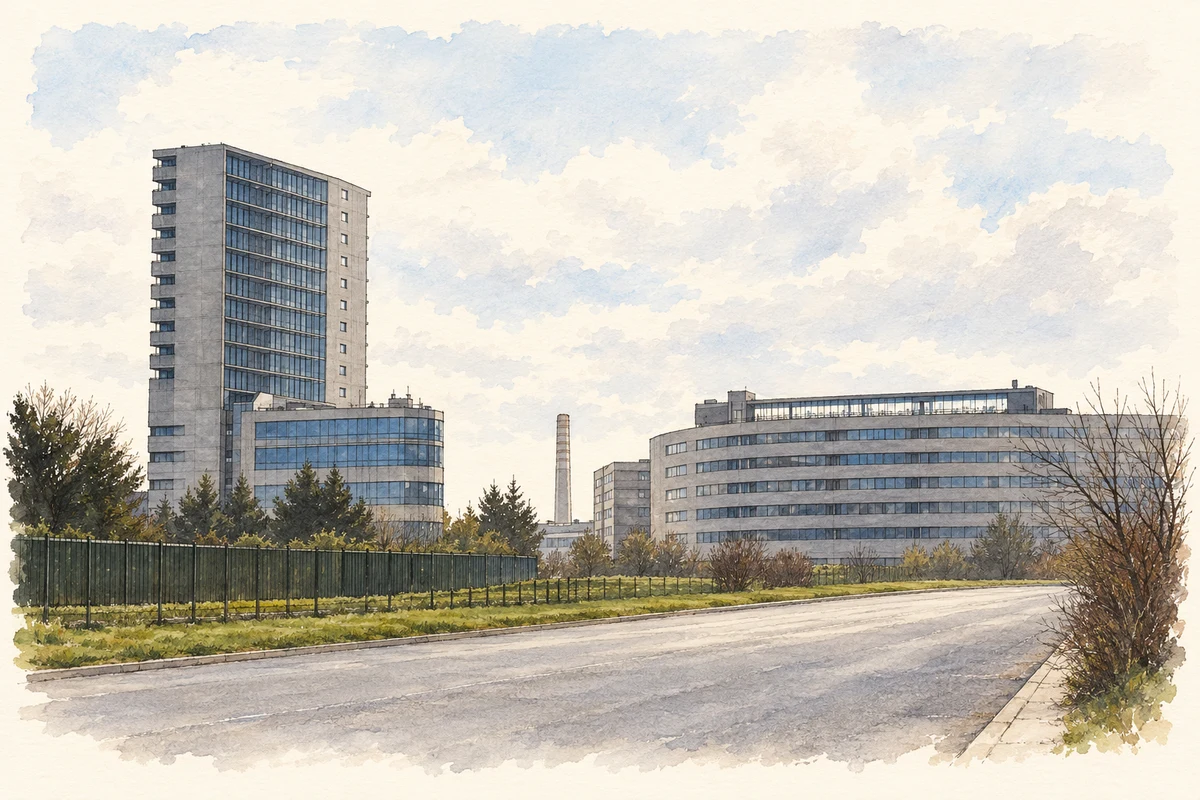
Ballymun’s changing skyline tells only part of a history also shaped by local campaigns, theatre and music.
The name
These Irish name elements are associated with this record in the Logainm glossary.
An element’s translation is a clue, rather than a complete explanation of the name. Its form and meaning depend on local history and the full Irish name.
Recorded forms
- Baile Munna · Irish · main form · validated name
- Ballymun · English · main form
Place & story
Seven towers and a changing skyline
Ballymun’s seven fifteen-storey towers were built during the 1960s and named after the signatories of the 1916 Proclamation. Each originally contained ninety flats. Their removal became a public marker of regeneration: on 13 March 2005, MacDermott Tower was brought down by explosives as former residents and other onlookers watched. RTÉ’s report recorded both the spectacle and residents’ personal attachments to the building, including the wish to keep a fragment of its rubble. [2]
The regeneration programme
The decision to replace the flat blocks was taken in 1997, followed by a masterplan in 1998. Dublin City Council records the subsequent delivery of replacement homes, a new Main Street, parks and community facilities. Its development plan also acknowledges the land left undeveloped after the regeneration company’s work ended. Ballymun’s transformation therefore involved both major physical changes and a continuing task of making new streets, services and sites function together. [3]
The last tower
Demolition of Joseph Plunkett Tower, the last of the seven still standing, began on 22 September 2015. Unlike the earlier explosive demolition at MacDermott Tower, machinery worked down from its top floor. RTÉ’s contemporary report described mixed feelings among those watching: the end of an era for former residents alongside the prospect of a different neighbourhood. The removal of the final tower changed a skyline that had identified Ballymun for almost half a century. [4]
Axis and community creativity
Axis opened in 2001 after local advocacy for an arts and community centre. Its twenty-fifth-anniversary account recalls how young people helped shape its visual identity: a workshop drawing of stacked chairs became the starting point for the logo. The building combines performance with everyday community activity, including dance and childcare. Its history records residents and artists helping to create a shared cultural place within the changing town. [5]
Ballymun Lullaby
Frank Berry’s 2011 documentary Ballymun Lullaby follows the work of music teacher Ron Cooney and young musicians during regeneration. Composer Daragh O’Toole developed music drawing on the students’ experiences and words, leading to a recording with the RTÉ Concert Orchestra. The film preserves a story of learning and collaboration within Ballymun, alongside the more widely photographed demolition of its buildings. Axis marked the music programme’s thirtieth anniversary with a screening in 2026. [6]
Geographic information
Sources & further reading
- Logainm.ie — Ballymun. Place names and geographic record, licensed under CC BY 4.0.
- Tower Comes Down With a Bang, broadcast 13 March 2005 · Orla O’Donnell, RTÉ
- Dublin City Development Plan 2022–2028: SDRA 2, Ballymun · Dublin City Council
- Last Tower to Go, broadcast 22 September 2015 · Sinéad Hussey, RTÉ
- Axis turns 25: community origins and the Axis logo · Axis Ballymun
- Ballymun Lullaby: music programme anniversary screening · Axis Ballymun and TU Dublin Ballymun Music Programme
- Ballymun Centre, Dublin, in January 2007 illustration: based on a Ballymun Centre, Dublin, Ireland by Peter Gerken. AI-assisted watercolour and ink adaptation; cream paper margins added, incidental clutter omitted and fine details simplified. Licence: CC BY-SA 2.0.
Name record retrieved 2026-10-25 · Source record modified 2021-02-17. How this page was prepared.