These Irish name elements are associated with this record in the Logainm glossary.
An element’s translation is a clue, rather than a complete explanation of the name. Its form and meaning depend on local history and the full Irish name.
Recorded forms
Cill Ia· Irish · main form · validated name
Killeagh· English · main form
Place & story
The estate roads through Glenbower
Glenbower Wood lies beside Killeagh in the valley of the Dissour. The community organisation's account links its roads and bridges with improvements made by Arthur de Capell Brooke in the 1830s. The steep valley slopes helped woodland survive where more accessible land could be cultivated. Later forestry introduced stands of conifers alongside the older woodland. The landscape therefore preserves several periods of intervention: an estate's access routes and ornamental features, commercial planting and the paths through which the community now uses the wood.[2]
The mill and the watercourse
The mill at Killeagh depended on water brought from the Glenbower valley. The county council's industrial-heritage survey records the surviving mill buildings and the millrace that can be followed from the woodland paths. Iron tie plates on the gable helped resist the outward pressure created by grain stored on upper floors. The building continued as a grain store until a fire in 1971. These remains connect the picturesque glen with a practical system of water control, storage and processing that supported the village's working economy.[3]
May Sunday returns to the wood
May Sunday brought music, dancing and outings to Glenbower and Killeagh for generations. The event ceased in 2001, but Greywood Arts worked with local groups to revive it in 2018. The renewed programme placed the woodland at its centre, combining performances and creative workshops with local history and ecology. Subsequent festivals added art trails, while pandemic restrictions prompted further adaptations. This recent history is documented by the organisers themselves and shows a community celebration taking new forms while remaining closely attached to the same local landscape.[4]
Both counts use the 2016 settlement boundary, allowing like-for-like comparison. CSO supplies the 2022 count on this older boundary for comparison only. The official 2022 Built Up Area has different boundaries.
View population figures
Killeagh — Census 2016 settlement footprint — census population
These are the historical areas published in the 2006 census report. Boundaries may differ between censuses and from modern settlements. Legal towns, environs and suburbs are shown separately; none has been combined into a modern settlement total.
View population figures
Killeagh, Cork — Census town, CSO 2006 report — census population
These are the historical areas published in the 1996 census report. Boundaries may differ between censuses and from modern settlements. Legal towns, environs and suburbs are shown separately; none has been combined into a modern settlement total.
View population figures
Killeagh, Cork — Census town, CSO 1996 report — census population
Figures cover the historical town area printed in the 1986 report. Boundaries may have changed between censuses. Legal town, environs and suburb totals remain separate and differ from modern settlement boundaries.
View population figures
Killeagh, Cork — Census town, CSO 1986 report — census population
These figures use different area definitions. Read the boundary note before comparing them.
Killeagh, Cork
Published census settlement populations
899people · 2016
Settlement boundaries changed during this period. Differences may reflect boundary changes as well as population change. Where a 2011 legal-town-and-environs count is shown, it has not been recalculated onto the 2016 settlement boundary.
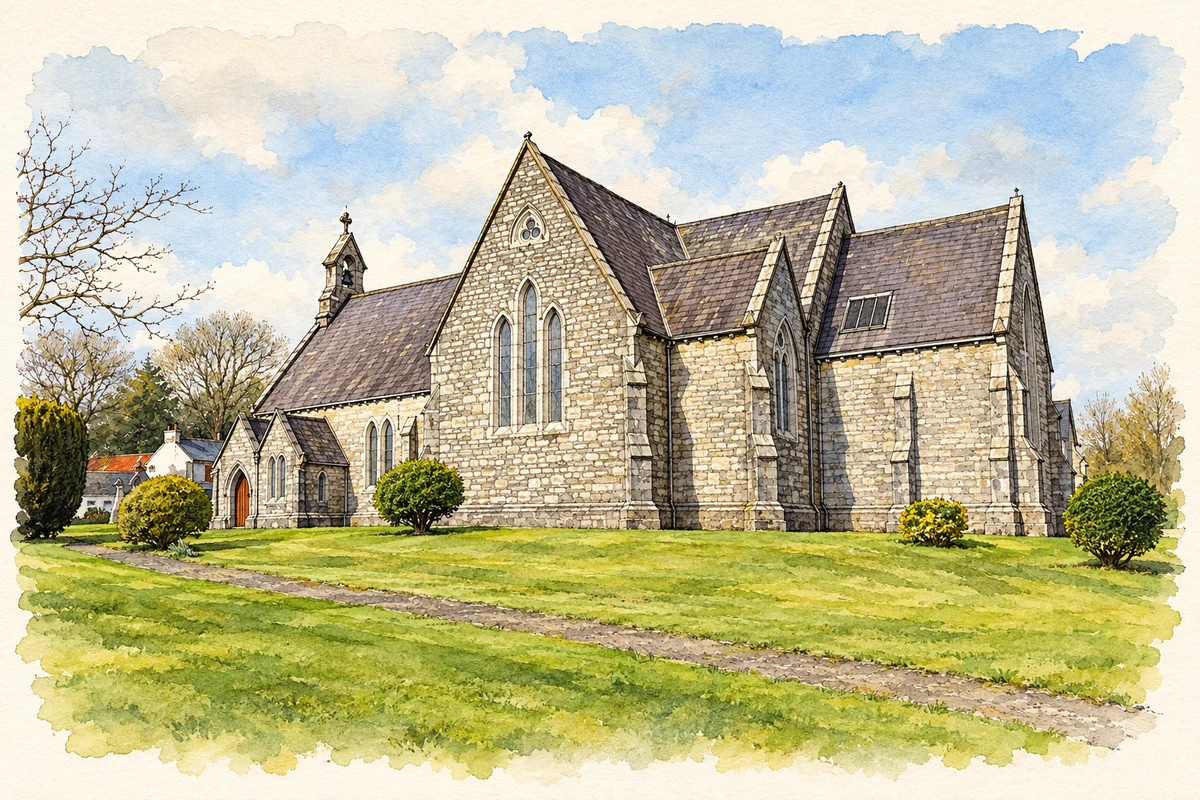
Church of St John and St Virgilius, Killeagh, County Cork illustration: based on a The Church of St John & St Virgilius (RC), Killeagh by John Lucas. AI-assisted watercolour and ink adaptation; cream paper margins added, incidental clutter omitted and fine details simplified. Licence: CC BY-SA 2.0.
 placenames