 placenames
Milltown
Baile an Mhuilinn
Water-powered industry and generations of football supporters have both shaped Milltown beside the Dodder. Its mills supplied varied trades, while Glenmalure Park became a home whose loss prompted a determined campaign.
The name
These Irish name elements are associated with this record in the Logainm glossary.
An element’s translation is a clue, rather than a complete explanation of the name. Its form and meaning depend on local history and the full Irish name.
Recorded forms
- Baile an Mhuilinn · Irish · main form · validated name
- Milltown · English · main form
Place & story
Manufactures beside the Dodder
Francis Elrington Ball’s history of County Dublin describes eighteenth-century Milltown as a place of varied manufacture on the Leeson family’s estate. Its industries included two corn mills, a brass mill, an iron mill, a paper mill and a mill grinding dry woods. Limestone was quarried near Milltown Bridge, and garden pots were made locally. Ball also records John Classon, owner of the dry-wood mill, building Classon’s Bridge late in the century, when an older crossing was too narrow for vehicles and travellers also used a dangerous ford. [2]
Glenmalure Park takes shape
Shamrock Rovers rented land on Milltown Road in 1922, shortly before the property passed to the Jesuits. As the club grew, it developed a neighbouring plot as Glenmalure Park. The first match there, against Dundalk on 11 September 1926, ended 3–3; a friendly against Belfast Celtic marked the official opening eight days later. A main stand followed in the 1928–29 season. These developments made Milltown a lasting centre of the club’s sporting life. [3]
The fight to keep Rovers in Milltown
An RTÉ report broadcast on 14 April 1987 recorded the decision to leave Glenmalure Park for a ground share with Home Farm at Tolka Park. Supporters had protested with a half-time pitch invasion during the match against Sligo Rovers two days earlier. The following month, a charity match brought former stars back to Milltown. RTÉ reported that the Keep Rovers At Milltown campaign had raised £100,000 in a week, showing how quickly supporters organised to defend the ground’s future. [4] [5]
Geographic information
- Place type
- Population centre
- County
- Dublin
- Barony
- Uppercross
- Within
- Dublin
- Civil parish
- Saint Peter's
- Within
- Rathmines West A
- Coordinates
- 53.30758, -6.25956 (approximate)
- Logainm ID
- 1412147 ↗
Sources & further reading
- Logainm.ie — Milltown. Place names and geographic record, licensed under CC BY 4.0.
- A History of the County Dublin, Volume II: portion of the parish of St Peter · Francis Elrington Ball, 1903
- The history of the Hoops: Rovers revived · Shamrock Rovers FC
- End of an era for Rovers at Milltown, 1987 · RTÉ Archives; report by Brian O’Connell, 14 April 1987
- Rovers past stars wonder about future, 1987 · RTÉ Archives; report by Cathal Mac Coille, 14 May 1987
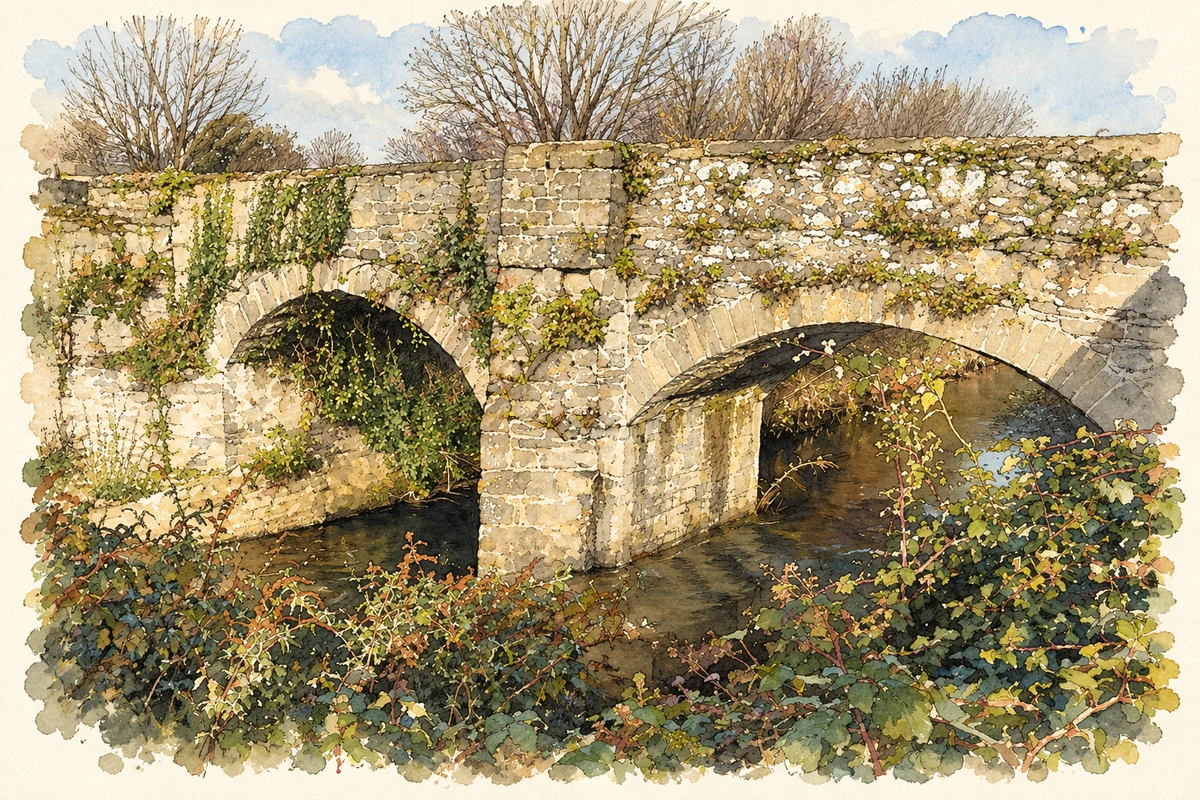
- Packhorse Bridge over the River Dodder, Milltown, Dublin illustration: based on a Old Bridge by kevin higgins. AI-assisted watercolour and ink adaptation; cream paper margins added, incidental clutter omitted and fine details simplified. Licence: CC BY-SA 2.0.
Name record retrieved 2026-10-25 · Source record modified 2011-11-01. How this page was prepared.