These Irish name elements are associated with this record in the Logainm glossary.
An element’s translation is a clue, rather than a complete explanation of the name. Its form and meaning depend on local history and the full Irish name.
Recorded forms
An Baile Nua· Irish · main form · validated name
Newtowncunningham· English · main form
Place & story
People & connections
John Cunningham and the Laggan settlement
The Cunninghams were among the Scottish landholders involved in the seventeenth-century plantation of Donegal. John Cunningham of Kilbirnie in Ayrshire established himself on lands beside Lough Swilly, and his name survives in Newtowncunningham. The settlement belonged to the wider transformation of the Laggan, whose productive farmland attracted undertakers bringing tenants from Scotland. Monreagh Heritage Centre's account places Newtowncunningham alongside Manorcunningham within this history, while distinguishing the several Cunningham relatives and the different grants they received.[2]
A Presbyterian meeting house of 1881
Newtowncunningham's Presbyterian church, dated 1881 above its doorway, replaced an earlier meeting house built around 1830. An informal congregation had been established in 1813. The Reverend George Thompson was the minister when the new building opened. Its bellcote, slate roof and stone detailing give it a recognisable roadside presence. A neighbouring former manse, grave markers and the school building complete a group that records the institutions through which this community organised worship, education and parish life.[3]
The boat-shaped Church of All Saints
The Catholic Church of All Saints was built between 1997 and 1999, replacing a church dating from 1810 on the same site. Its design takes St Peter's fishing boat as its model. The resulting form gives the village a distinctive modern religious landmark, contrasting with the pitched roofs and bellcotes of older local buildings. The parish's building history records the continuity of this place of worship across the replacement, linking the new church to nearly two centuries of earlier use.[4]
Newtowncunningham — Census 2016 settlement footprint
Population within 2016 settlement boundaries
1,179people · 2022
Both counts use the 2016 settlement boundary, allowing like-for-like comparison. CSO supplies the 2022 count on this older boundary for comparison only. The official 2022 Built Up Area has different boundaries.
View population figures
Newtowncunningham — Census 2016 settlement footprint — census population
Newtowncunningham, Donegal — Census town, CSO 2006 report
2002–2006: census town
999people · 2006
These are the historical areas published in the 2006 census report. Boundaries may differ between censuses and from modern settlements. Legal towns, environs and suburbs are shown separately; none has been combined into a modern settlement total.
View population figures
Newtowncunningham, Donegal — Census town, CSO 2006 report — census population
Newtowncunningham, Donegal — Census town, CSO 1996 report
1991–1996: census town
594people · 1996
These are the historical areas published in the 1996 census report. Boundaries may differ between censuses and from modern settlements. Legal towns, environs and suburbs are shown separately; none has been combined into a modern settlement total.
View population figures
Newtowncunningham, Donegal — Census town, CSO 1996 report — census population
Newtowncunningham, Donegal — Census town, CSO 1986 report
1981–1986: census town
664people · 1986
Figures cover the historical town area printed in the 1986 report. Boundaries may have changed between censuses. Legal town, environs and suburb totals remain separate and differ from modern settlement boundaries.
View population figures
Newtowncunningham, Donegal — Census town, CSO 1986 report — census population
These figures use different area definitions. Read the boundary note before comparing them.
Newtowncunningham, Donegal
Published census settlement populations
1,080people · 2016
Settlement boundaries changed during this period. Differences may reflect boundary changes as well as population change. Where a 2011 legal-town-and-environs count is shown, it has not been recalculated onto the 2016 settlement boundary.
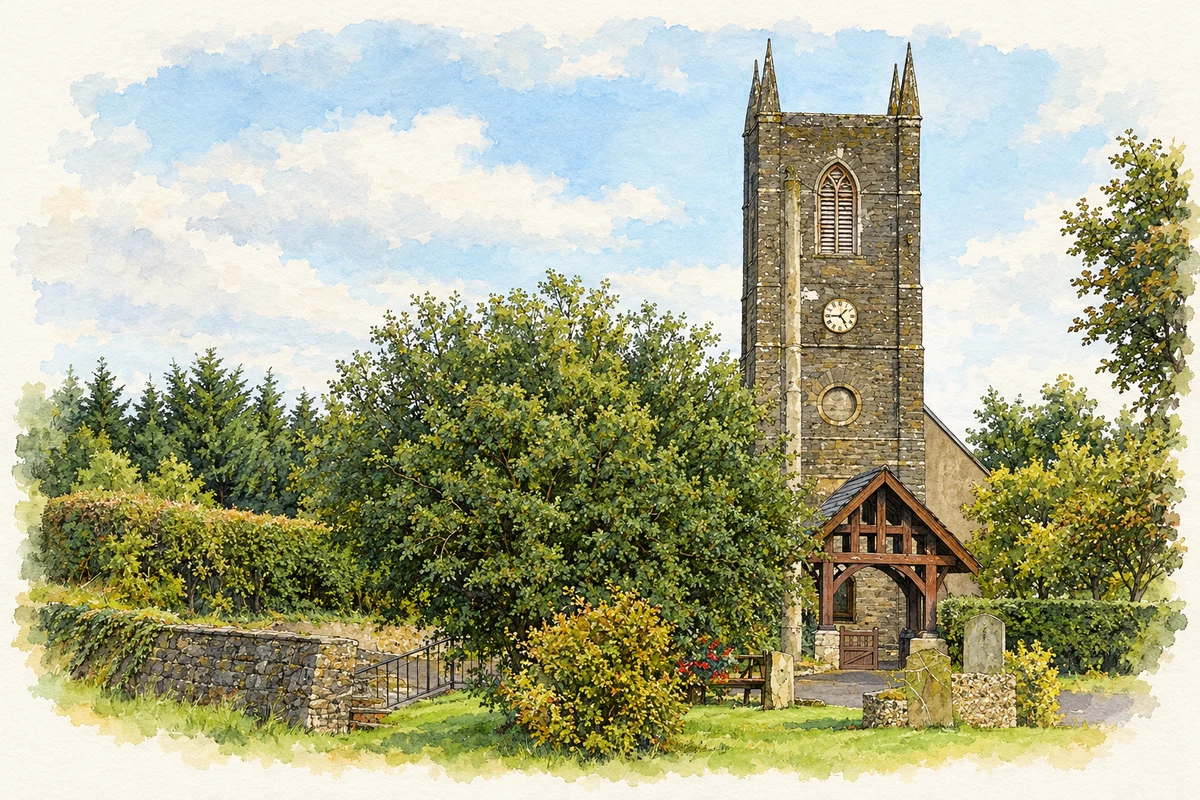
All Saints' Church of Ireland, Newtowncunningham, County Donegal illustration: based on a All Saints' Church of Ireland, Newtown Cunningham by David Dixon. AI-assisted watercolour and ink adaptation; cream paper margins added, incidental clutter omitted and fine details simplified. Licence: CC BY-SA 2.0.
 placenames