Glenties' literary connections reach from the labouring life of Patrick MacGill to the family home that inspired Brian Friel, beside a courthouse whose cost once divided officials.
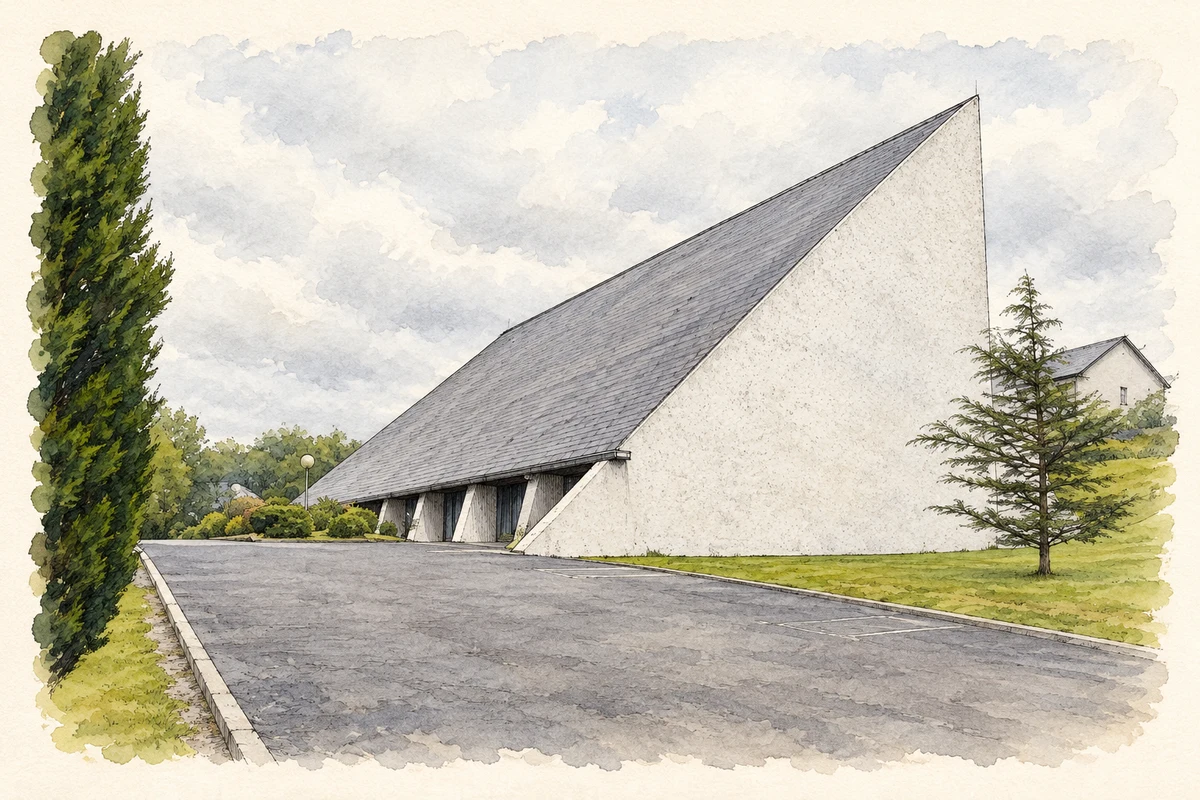
Illustration, St Connell's Church, Glenties
⊕Recorded locationGlenties54.79530° N · 8.28591° WInteractive map supplied by OpenStreetMap.
These Irish name elements are associated with this record in the Logainm glossary.
An element’s translation is a clue, rather than a complete explanation of the name. Its form and meaning depend on local history and the full Irish name.
Recorded forms
Na Gleannta· Irish · main form · validated name
Glenties· English · main form
Place & story
People & connections
Patrick MacGill and the working world
Patrick MacGill came from the Glenties district and attended Mullanmore National School. He left school young and was hired out at Strabane's fair before working in Scotland, including as a railway platelayer. His first poetry collection appeared in 1910, and the novels Children of the Dead End and The Rat-Pit followed in 1914 and 1915. During the First World War he served with the London Irish Rifles and was wounded at Loos. His early experience of migrant labour remained central to a writing career that carried him far from Donegal.[2]
People & connections
Brian Friel's summers at The Laurels
Brian Friel spent part of his childhood summer holidays at his mother's family home near Glenties. The Laurels became an important source for his imaginative world and the family setting of Dancing at Lughnasa. The Brian Friel Trust's centre project connects this cottage and garden with Glenties courthouse and a trail through places associated with the writer. The buildings give his literary connection a tangible local setting: a domestic home remembered in drama and a civic building intended to support exhibitions and performance.[3]
The courthouse the Grand Jury resisted
Glenties courthouse was completed in 1843, after disagreement over whether it was needed and what it should cost. The county Grand Jury considered the nearby provision at Donegal sufficient and resisted the Lord Lieutenant's direction to build at a cost of £900, arguing that £650 should suffice. The resulting building followed a version of William Caldbeck's standard design. Projecting end bays, round-headed upper windows and substantial chimneys framed a courtroom above basement cells. Its imposing form preserves the outcome of a distinctly practical argument about expenditure and local justice.[4]
Both counts use the 2016 settlement boundary, allowing like-for-like comparison. CSO supplies the 2022 count on this older boundary for comparison only. The official 2022 Built Up Area has different boundaries.
View population figures
Glenties — Census 2016 settlement footprint — census population
These are the historical areas published in the 2006 census report. Boundaries may differ between censuses and from modern settlements. Legal towns, environs and suburbs are shown separately; none has been combined into a modern settlement total.
View population figures
Glenties, Donegal — Census town, CSO 2006 report — census population
These are the historical areas published in the 1996 census report. Boundaries may differ between censuses and from modern settlements. Legal towns, environs and suburbs are shown separately; none has been combined into a modern settlement total.
View population figures
Glenties, Donegal — Census town, CSO 1996 report — census population
Figures cover the historical town area printed in the 1986 report. Boundaries may have changed between censuses. Legal town, environs and suburb totals remain separate and differ from modern settlement boundaries.
View population figures
Glenties, Donegal — Census town, CSO 1986 report — census population
These figures use different area definitions. Read the boundary note before comparing them.
Glenties, Donegal
Published census settlement populations
805people · 2016
Settlement boundaries changed during this period. Differences may reflect boundary changes as well as population change. Where a 2011 legal-town-and-environs count is shown, it has not been recalculated onto the 2016 settlement boundary.
 placenames