A reliable full-name meaning has not been established here. The recorded Irish and English forms are given without an unsupported translation.
Recorded forms
Abhóca· Irish · main form · validated name
Avoca· English · main form
Place & story
The picturesque and the industrial
In 1837 Lewis praised the valley’s scenery while also describing copper mines at Cronebane, Ballymurtagh, Ballygahan and other sites. Water wheels and steam engines appear in his account as tools for working and draining mines. Ore was carried overland towards Wicklow for shipping. These details place industry within the same landscape celebrated for its rivers and woodland.[2]
Work and local institutions
The directory records a school supported by mine proprietors for miners’ children, alongside other schools and religious buildings in Castlemacadam parish. Employment helped shape the community as well as the ground itself. Newbridge’s separate entry mentions a chapel and attached national school, but does not provide an independent village population.[2][3]
People & connections
A confluence made famous in song
At the Meeting of the Waters, the Avonmore and Avonbeg unite to form the Avoca River. Thomas Moore’s song made this confluence one of the valley’s best-known places. Queen’s University Belfast records the lyrics in the first number of Irish Melodies, published in 1808 with musical accompaniments by John Stevenson. The poem praises the place but gives equal weight to the companionship of friends. Its significance is literary as well as scenic: a river junction became a remembered destination through a song that circulated well beyond County Wicklow.[5][7][8]
Folklore & tradition
The remembered tree
A local tradition places Moore beneath a tree at the confluence while composing his verses. Keith Collie’s contribution to the county heritage archive includes a family photograph from about 1925 of the tree associated with that story. The heritage account also records a replacement after the older tree fell. This is a useful distinction between a documented poem and a remembered spot of composition.[5][6]
Both counts use the 2016 settlement boundary, allowing like-for-like comparison. CSO supplies the 2022 count on this older boundary for comparison only. The official 2022 Built Up Area has different boundaries.
View population figures
Avoca — Census 2016 settlement footprint — census population
These are the historical areas published in the 2006 census report. Boundaries may differ between censuses and from modern settlements. Legal towns, environs and suburbs are shown separately; none has been combined into a modern settlement total.
View population figures
Avoca, Wicklow — Census town, CSO 2006 report — census population
These are the historical areas published in the 1996 census report. Boundaries may differ between censuses and from modern settlements. Legal towns, environs and suburbs are shown separately; none has been combined into a modern settlement total.
View population figures
Avoca, Wicklow — Census town, CSO 1996 report — census population
Figures cover the historical town area printed in the 1986 report. Boundaries may have changed between censuses. Legal town, environs and suburb totals remain separate and differ from modern settlement boundaries.
View population figures
Avoca, Wicklow — Census town, CSO 1986 report — census population
These figures use different area definitions. Read the boundary note before comparing them.
Avoca, Wicklow
Published census settlement populations
771people · 2016
Settlement boundaries changed during this period. Differences may reflect boundary changes as well as population change. Where a 2011 legal-town-and-environs count is shown, it has not been recalculated onto the 2016 settlement boundary.
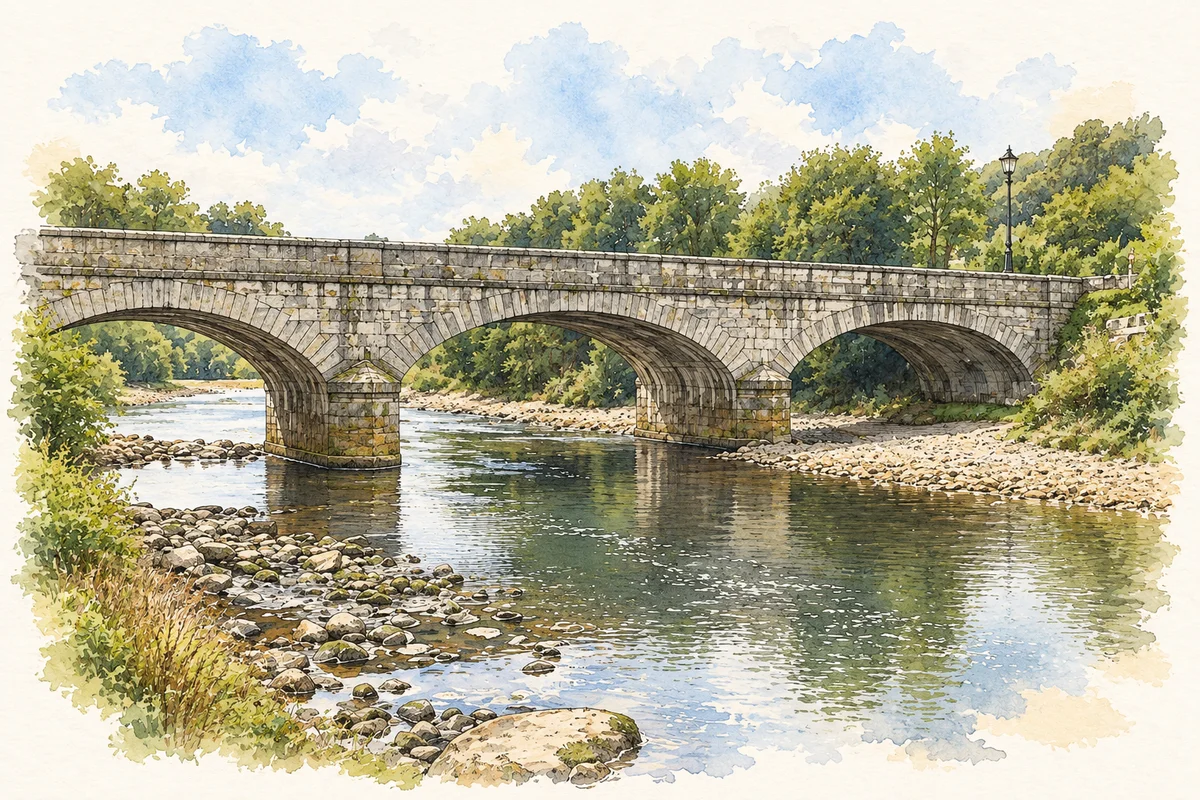
Avoca Bridge illustration: based on a reference photograph by Eirian Evans. AI watercolour/ink adaptation; cropped bridge end extended, margins added and fine details simplified. Licence: CC BY-SA 2.0.
 placenames